

Kittelschürze
On apron dresses, invisible women and my grandma Inge

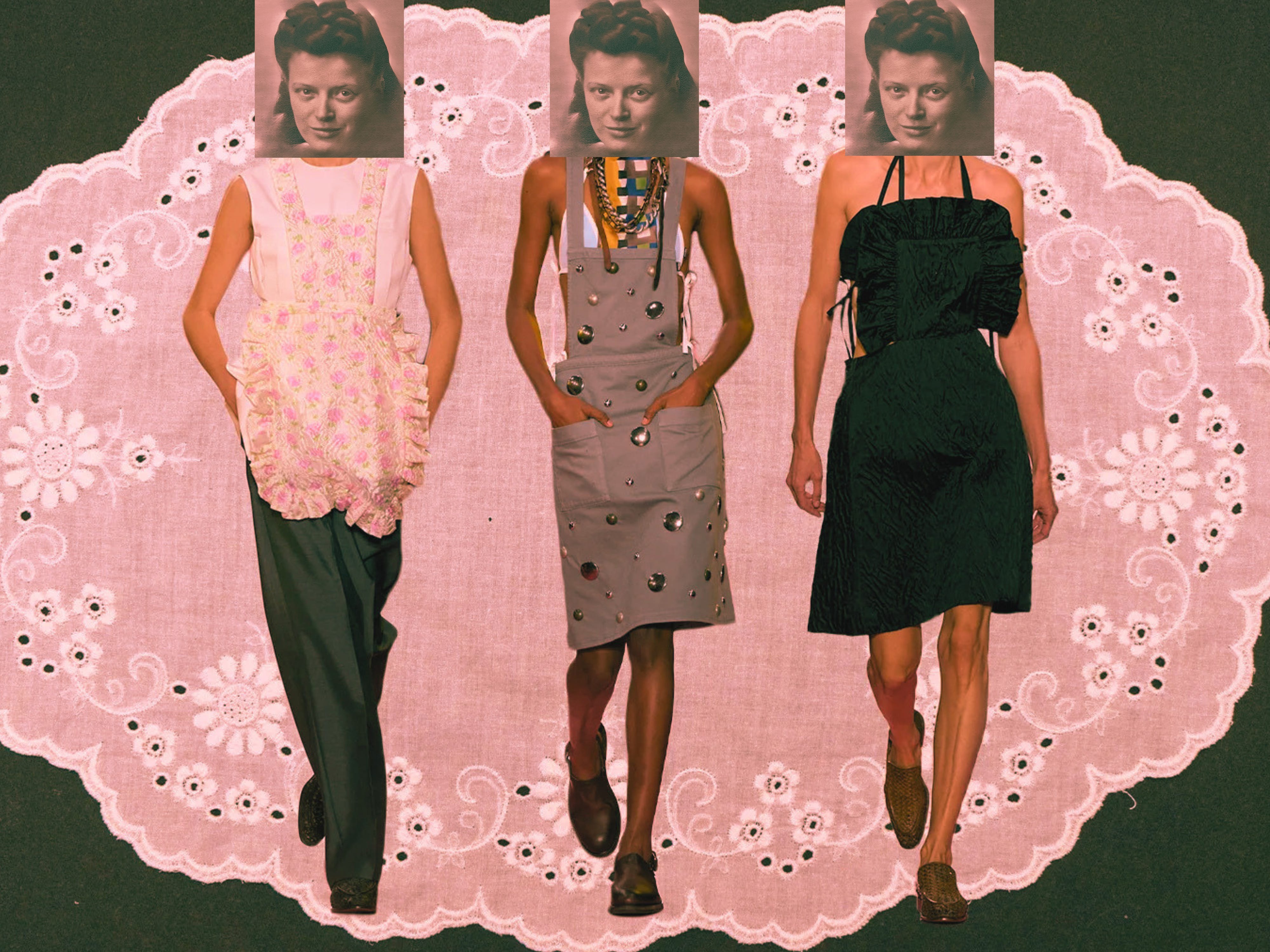
The internet is currently debating whether the apron dress represents submission, nostalgia, or reactionary femininity. I keep thinking instead about my grandmother.
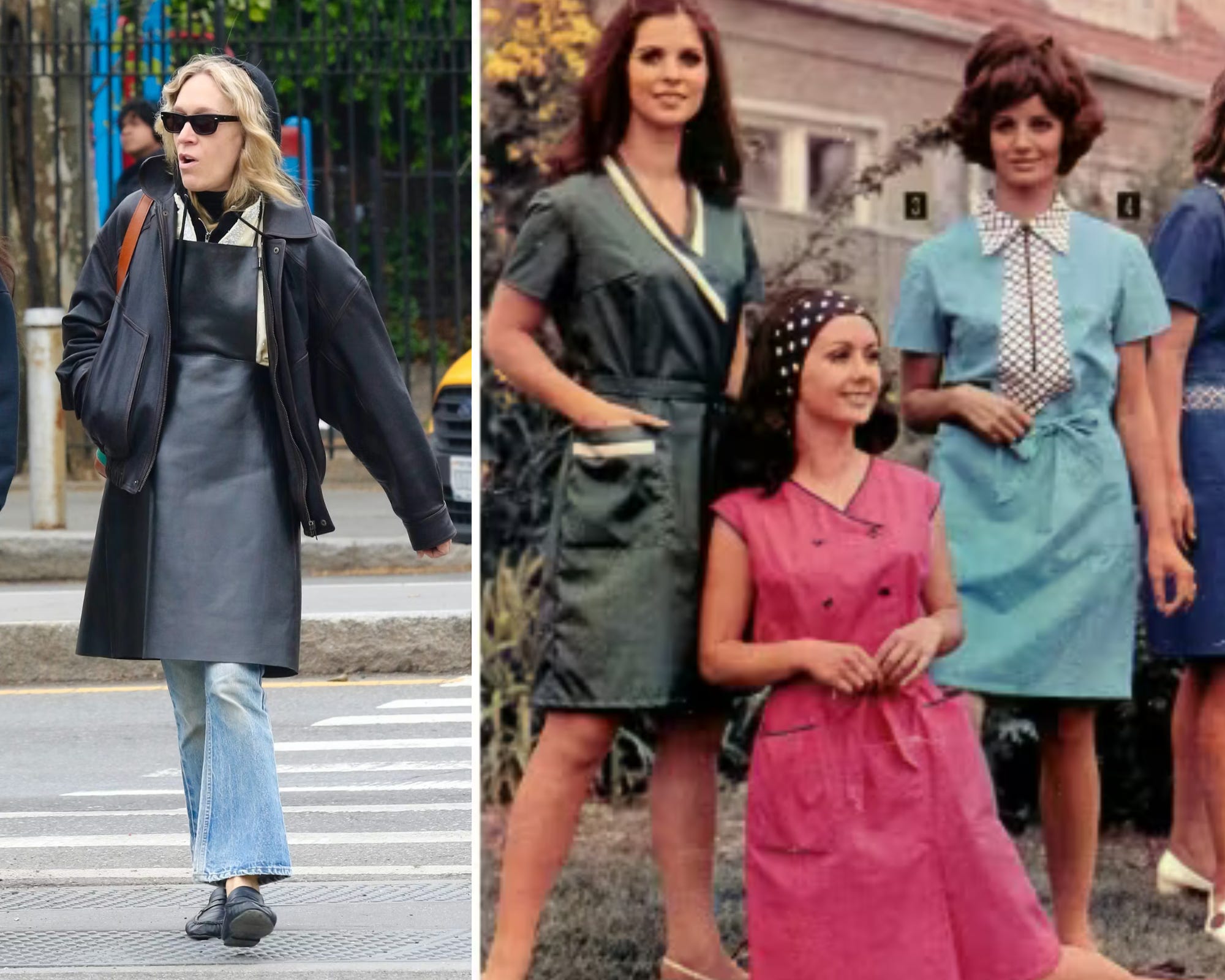
Today I read yet another article declaring the apron dress the must-have item for spring. Apparently, the postwar European housewife staple was resurrected by Miu Miu for Fall 2025 and has since reappeared at Calvin Klein, Talia Byre and on downtown forever It-girls like Chloe Sevigny. Predictably, this sparked a discourse about tradwives and domestic femininity and whether fashion can rehabilitate symbols of submission.
But none of that is actually very interesting to me.
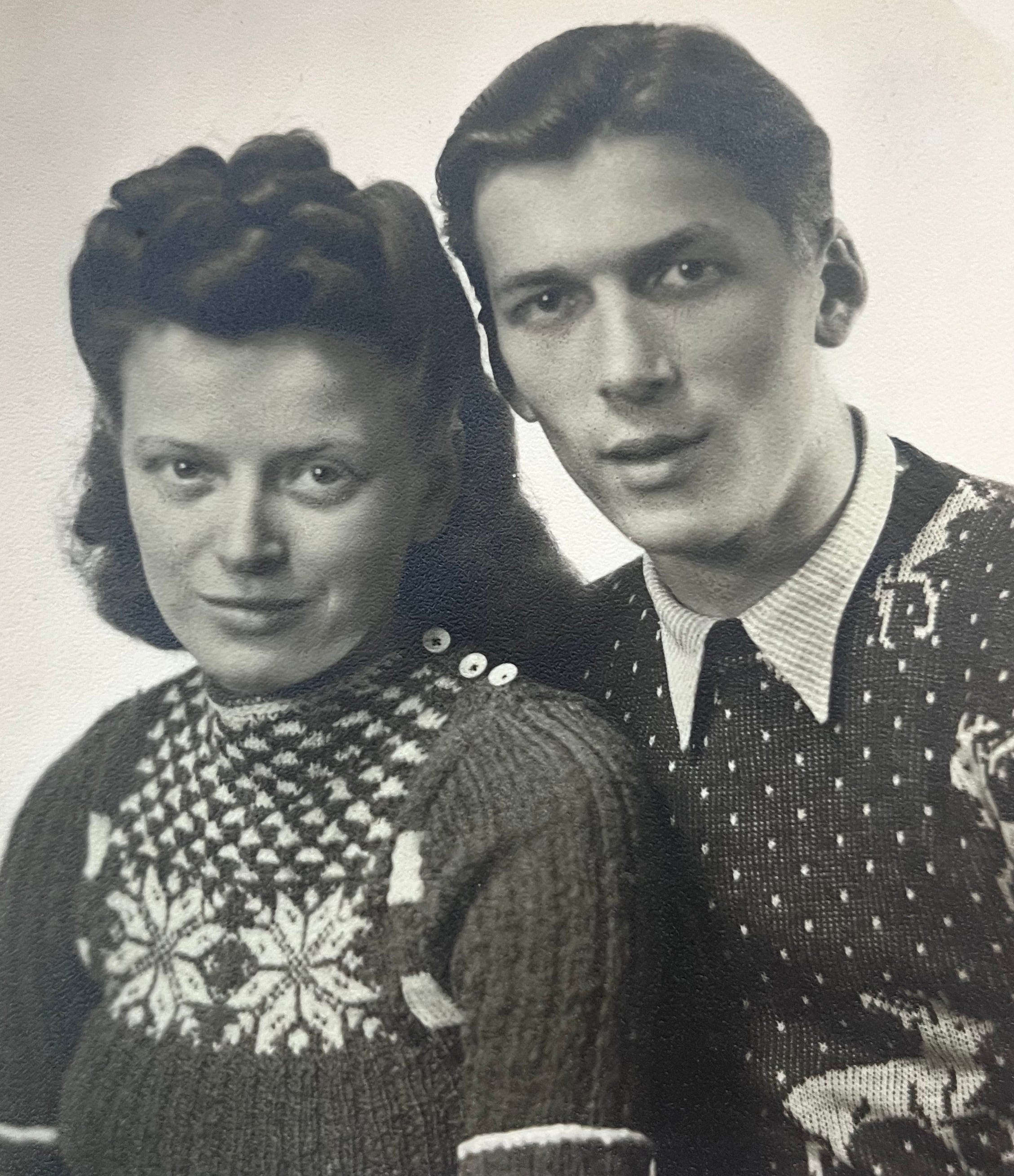
What interests me is my grandmother, Oma Inge, who has been dead for a few years now.
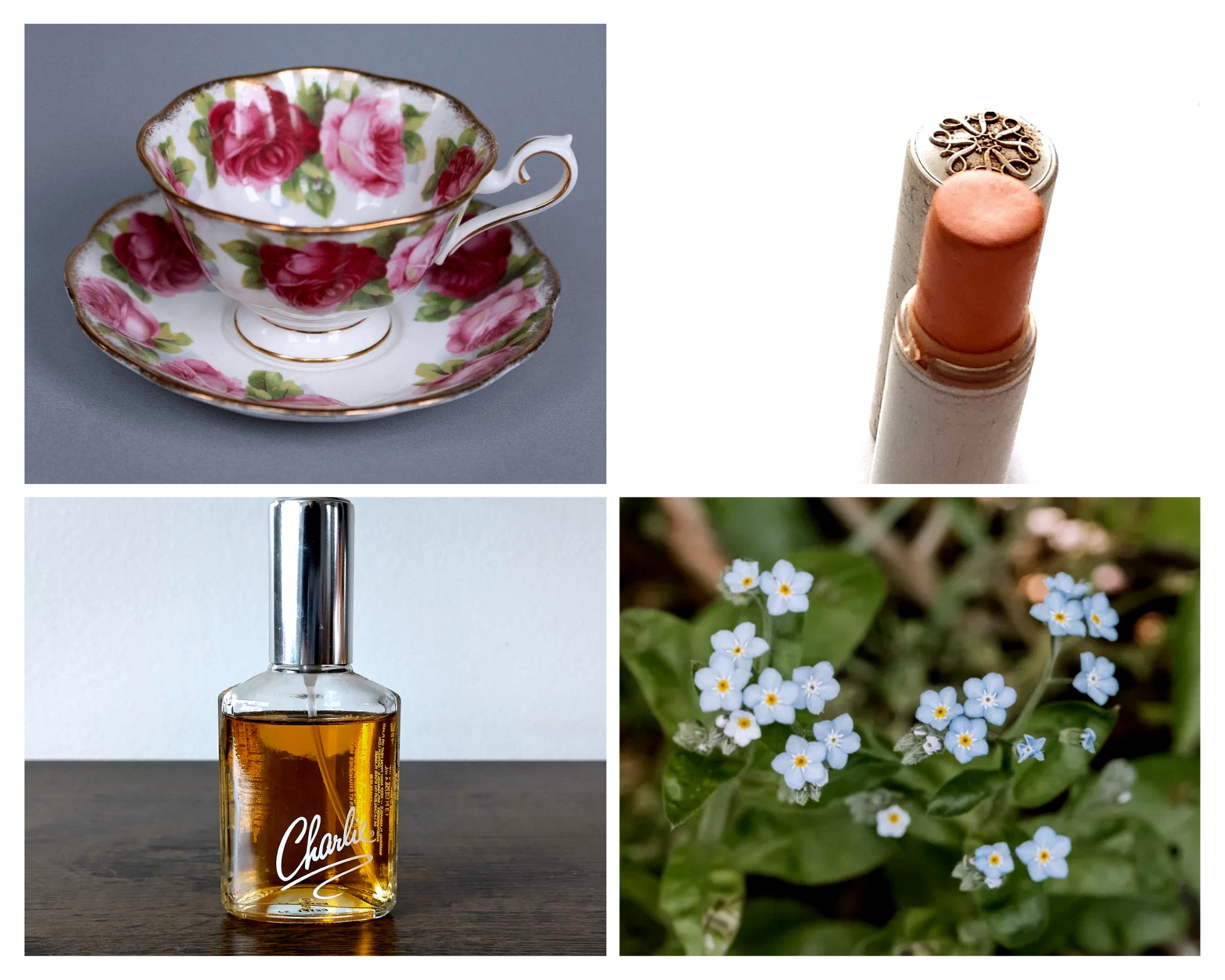
She wore the apron dress — Kittelschürze in German — over a formidable monstrosity of a beige corset with rows of tiny hooks I was sometimes entrusted to help close. She had a cheap forever perm, used astonishing amounts of hairspray and wore an Avon lipstick that smelled absolutely disgusting to me as a child.
Her life was cooking, cleaning, treating my grandfather like a pasha and taking care of me, my little brother and my cousin while our parents were off doing glamorous adult things like traveling to Morocco or playing tennis matches.
I preferred staying with Oma.
She was warm and soft and endlessly permissive. She let us drink Coca-Cola, eat candy and stay up too late watching movies meant for adults, like “Belle de Jour” and “The Good, the Bad and the Ugly.” Her love had a physical quality to it: coffee, hairspray, pot roast.
At the time, I never wondered whether she was happy. Children rarely do. Women like my grandmother can begin to seem less like people than like part of the atmosphere of childhood — always there, always giving.
She kept an old radio in the kitchen and we listened to Elvis and Chet Baker and big band music while she cooked. Her books were flimsy paperbacks about doomed young women wandering through castles, threatened by madness or tuberculosis.
I don’t remember her ever sitting down unless it was to peel potatoes for lunch — my grandfather demanded a hot meal in the middle of the day — or later for coffee and cake in the afternoon.
When did she even have time to read?
That question haunts me now in a way it never did when I was little. Was she happy? Did she ever want another life? It is too late to ask now, so I will never know.
And yes, she wore those damn apron dresses. We hung them on the clothesline outside in the summer and in the basement in the winter, flowered fabric swaying beside pillowcases and dish towels. I cannot separate her from that look because she wore some version of it almost until the end of her life.
Her favorite flowers were forget-me-nots. Her favorite perfume was Charlie by Revlon. Her favorite movie was Breakfast at Tiffany’s. She already looked like a grandmother when she was the age I am now.
I would have withered inside her life. I would have rebelled against it violently to the point of a nervous breakdown. But she kept going. Cleaning and cooking and shopping and making beds and serving coffee, day after day, decade after decade.
College belonged to another universe entirely. She belonged to a generation of women who married young, had children young and grew old early. A generation for whom spinsterhood carried the atmosphere of catastrophe.
It is so easy to flatten women like her into symbols.
My Dad disliked her almost immediately. The first time they met, she served coffee and cake in precious Royal Albert porcelain cups from England, which she collected along with Hummel figurines, and asked him, translating directly from Dutch, “Must you have a piece of cake?” My father, young and irritated and unfamiliar with the expression moet je een stukje taart hebben?, thought: what the fuck? I don’t have to have cake.
He never recovered from the impression.
Officially, he disliked her because she seemed provincial to him. Unsophisticated. Too obviously from another world. To him she was just a basic woman in an apron dress.
But to me she was safety itself. A soft body to cry into or hide behind.
And I feel ashamed now for never having tried harder to see her fully while she was alive. Not just as Oma — not just as comfort and routine and unconditional love — but as an actual person. The girl who survived the war. The young woman who must once have imagined a different future. The woman underneath the apron dress.
But it’s too late for that now.
What remains are fragments. Charlie perfume lingering in the bathroom. Pot roast. Scandalous young Elvis on the kitchen radio. Potatoes sprouting pale arms in the basement. Flowered dresses stiff from the clothesline.
I want to say: I see you now. Finally, I see you.
I see your devotion too. That word sounds embarrassing now, hopelessly antiquated. But I mean it reverently. There was love in the endless repetition of it.
So here’s to Oma, apron dress and all: I loved you then fiercely, and I love you now.
That was beautiful to read. Thank you for sharing those words about your grandmother.
Oma, hears you…