

Where Unicorns Dance
A Town of Almost

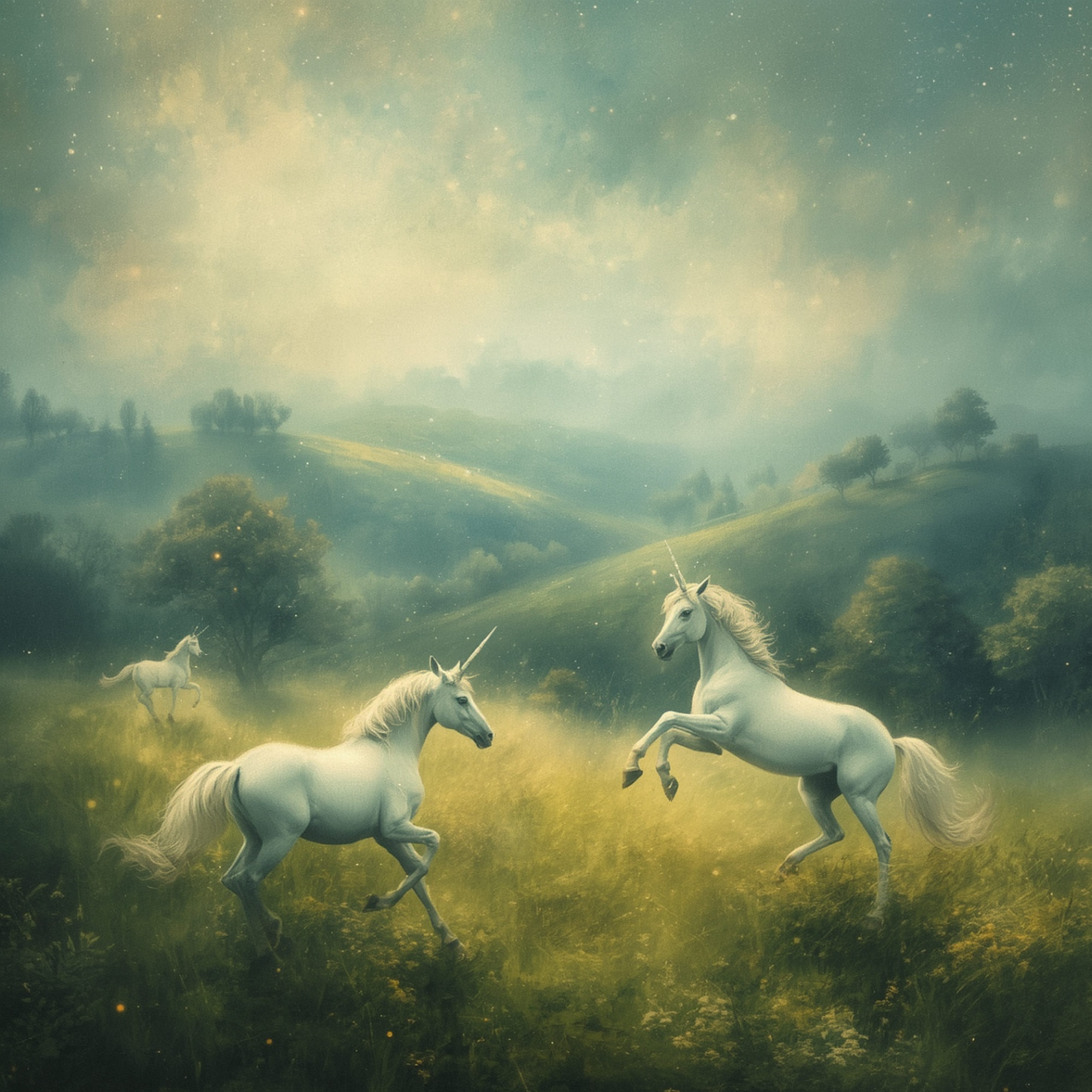
The young boy was cold. There was always sunshine in LA, but here it always rained. The winter sky hung low and heavy after breakfast, but he was excited. He hadn’t been able to sleep most of the night, thinking about seeing the unicorns.
Mama was happy for once. Lately, she’d been lying in bed for hours, staring at a black-and-white poster of a film star and listening to sad music. He didn’t know “Brigitte Bardot” or “Nico,” but he knew they were important to Mama.
They cleared away breakfast, put on their coats, and got into the car—him, his mum, and his grandparents, with four umbrellas. The drive to the small town was short. They passed tulip fields submerged in water and quaint old windmills along the canals. It started to drizzle as they parked in Hoorn—the city of the unicorns.
Mama wore a vinyl raincoat and chunky black high-heeled boots. She looked a bit like that film star, but with very sad blue eyes. She held his small, cold hand in her bigger, warmer one as they strolled toward the center of town.
It wasn’t very big, but to him, everything loomed large. The streets were narrow, and the cobblestones slick and black. Dark houses, tall and tightly packed, seemed to lean toward each other, whispering secrets above their heads. Their pointy roofs sloped like eyebrows raised in judgment. Many had deep blue doors with ornate handles and iron scrolls—but even the pretty things felt a little spooky. Mama pointed out unicorns—statues, carved lintels, faded frescoes. They were everywhere, but they looked twisted. Not what he had pictured.
Now and then, Mama and Grandma popped into little boutiques and came out with shiny bags and big smiles. He and Grandpa waited outside. Grandpa wasn’t very talkative. He asked the boy about his classes and his teachers. The boy didn’t feel like talking.
“Where are the unicorns?” he asked.
Grandpa just shook his head.
At the last shop, Mama and Grandma said they had a surprise. A candy store was just around the corner.
“Snoep!” Mama yelled, dragging him inside.
The store smelled musky and syrupy. The sweets were strange—black fish, gooey spirals of pink and green. Mama got her favorite, a thick cinnamon stick.
“Kaneelstokje,” she said. “Yummy.” “What do you want?”
He pointed to the little black fish. The shopkeeper scooped some into a white triangular bag. Outside, the boy tasted one. It was bitter and sour, but he was afraid to spit it out. Everything felt so dark—the sky, the buildings, even the ground.
They kept walking. The adults paused at churches and old fountains. The boy watched every shadow, hoping to spot a unicorn.
They passed another shop, and something shimmered in the window.
“Mama,” he said, pulling her arm.
Crystals hung from the branches of a fake—or maybe real—tree, suspended by invisible strings. They twinkled with magic.
“Mama, can I have one?”
They went inside. It smelled like sage or incense. Velvet curtains, warm light. He wanted to stay. But Mama said,
“Hurry up and pick one—Grandma is thirsty for coffee.”
He struggled to choose. So many colors—clear, pale pink, soft purple. He pointed to one, and the shopkeeper fetched it from the display.
“I’ll wrap it for you,” the man said.
At the counter, the boy noticed a wound on the man’s finger. Blood dripped onto the white tissue paper. The man didn’t notice.
“Here you go,” he said, handing over the blood-stained package.
Mama didn’t notice either. She paid with her credit card and hurried him out. Grandma and Grandpa were already ahead, as always. The boy held the wrapped crystal tightly.
“We found a café!” Grandma called. It sat by the water—churning, oily, dark.
Mama ordered his favorite: a pannenkoek. The boy tried not to look at the water. Instead, he peeked at the blood on the wrapping paper. The adults were busy chatting about people they knew.
When the pancake arrived, he couldn’t eat it. He could taste the metal of blood in his mouth. A lump rose in his throat.
“Where are the unicorns?” he asked again.
No one answered.
It started to rain again. Mama threw some Euros on the table and said, “Let’s go. Back to the car.”
A foghorn moaned. Seagulls screeched.
When no one was looking, the boy tossed the package into the water. It didn’t sink right away. He wanted to watch it disappear—but the adults were already walking ahead, fast.
He thought of spring. The day Mama had taken him to the botanical garden with the pink camellias. How they got a little lost. How they stumbled upon a clearing, where the weak sun filtered through the trees to touch a patch of impossibly green grass.
“Look,” Mama had said. “This is where unicorns dance.”
On the drive home, the boy was quiet. He held back tears and thought of the blood.
There were no unicorns. Not in Hoorn. Not in the clearing. Not anywhere.
Heart touching
spoken to my inner child. very touching piece